
Contact us
Makedonsko-Kosovska Brigada 9 br.29 Skopje - Cair,Skopje/North Macedonia


 International Balkan University
International Balkan University is a forward-thinking institution committed to sustainability through its GoGreen Campus initiative. By promoting digitalization, reducing paper use, improving energy efficiency, and encouraging environmentally responsible practices, the university integrates sustainability into everyday academic and administrative life, fostering awareness and responsibility among students, staff, and the wider community.
THE AIMS: 1. Climate Protection Objectives The action plan focuses on reducing greenhouse gas emissions and clearly defining the university's environmental footprint. 2. Resource Reduction Targets Targets include minimizing waste, water consumption, and electricity use through energy-efficient technologies and practices. 3. Community Engagement and Sustainability Engaging campus community to promote sustainability practices and the waste hierarchy: reduce, reuse, recycle. 4. Monitoring and Evaluation Establishing systems to track progress on sustainability goals and ensure accountability and continuous improvement.
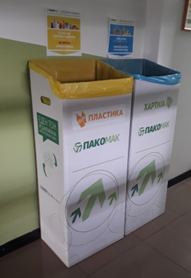
The "3Rs" (Reduce, Reuse, Recycle) are the foundation of sustainable waste management, emphasizing reducing waste generation first, then reusing materials, and finally recycling what cannot be reused. This approach is critical given the significant increase in global raw material extraction and its impact on GHG emissions, biodiversity, and pollution. The ultimate aspiration is zero waste, aiming to redesign resource lifecycles so no waste goes to landfills or incinerators. This framework is deeply embedded in the concept of a circular economy, which seeks to eliminate waste by continuously reusing or recycling materials, minimizing the input of virgin materials. Our plan aims to integrate the 3Rs into policy settings, infrastructure, education, procurement, and built environment projects.
Energy efficiency is a national priority for North Macedonia, with projected increases in primary and final energy consumption by 2040. Universities play a vital role in addressing this through energy reduction and building control. Our strategies cover: • Improving building energy performance: Upgrading to efficient LED lighting, enhancing insulation, and decarbonizing heating systems. • Renewable energy integration: Installing solar photovoltaic (PV) panels. • Sustainable Procurement: Considering extrinsic costs and maximizing positive environmental effects in purchasing decisions. • Changing energy-consuming habits: Promoting individual efforts to save energy and fostering collective responsibility through awareness campaigns and data feedback. • Effective monitoring and control systems: Implementing metering systems and real-time energy consumption monitoring.
Water management procedures are essential for the sustainable and efficient use of water resources. Our approach involves: • Water preservation & efficient Use: Installing low-flow fixtures, regular leak detection, and smart irrigation. • Rainwater accumulation & reuse: Collecting rainwater from rooftops for non-potable uses like toilet flushing or irrigation. • Stormwater management: Incorporating green infrastructure (e.g., green roofs, permeable platforms). • Water quality monitoring: Regular testing to ensure health standards and prevent pollution. • Awareness & education: Engaging students and staff through campaigns and integrating water sustainability into academic programs. • Data-driven decision making: Installing submeters to track water use and benchmarking performance.
Transportation is a major contributor to carbon footprints, with commuting identified as the most significant contributor to total GHG emissions, underscoring the urgency of addressing this issue. Our strategies aim to reduce GHG emissions from the university fleet, commuting, and air travel. Key approaches include: • Promoting sustainable commute modes: Carpooling, public transportation, walking, cycling, and discouraging private vehicle use. • Electrification of vehicle fleets: Transitioning university-owned vehicles to electric, supported by robust charging infrastructure. • Reducing business and air travel: Implementing policies to reduce non-essential travel, promoting digital alternatives, and land-based travel. • Policy, planning, and data management: Developing comprehensive sustainable transport action plans. • Behavioral and educational initiatives: Awareness campaigns to encourage sustainable travel options and help staff/students reflect on their carbon footprint.
Reducing the carbon footprints via: Tree planting; Developing a strategy for sustainable agronomy: farming/agronomy
This section deals with: • Green initiatives: Events IBU staff participated in or organized by IBU or some other entity; • Green Curriculum: List of sustainability-related courses and projects; • Student-Led Initiatives: Showcase of ongoing projects and awards; • Volunteer Opportunities: Tree planting, clean-ups, workshops. Sustainability Blog: Articles, interviews, and updates.
Monitoring and reporting are done through: • Annual Sustainability Reports (Downloadable PDFs); Live Dashboard: KPIs for waste, energy, water, and transport; Feedback Form: Suggestions from the university community; Partnerships: Info on collaborations with government and NGOs.
Get in touch with the Green Office to become part of it.



 EDUCATION & MONITORING